This growing demand has pushed manufacturers to rethink how large-capacity plastic products are made. Traditional production methods often struggle to maintain consistent quality when container sizes increase. A storage tank that looks strong on the outside can develop weak points if material distribution is not carefully controlled during manufacturing.
This is where 500 litre blow moulding machines become essential. Designed to produce large, durable containers with precision, they help manufacturers create stronger, more reliable storage solutions that meet real-world industrial demands. As storage needs grow across sectors, large-capacity blow moulding technology directly enhances product performance and manufacturing efficiency.
Growing Demand for Larger Storage Solutions
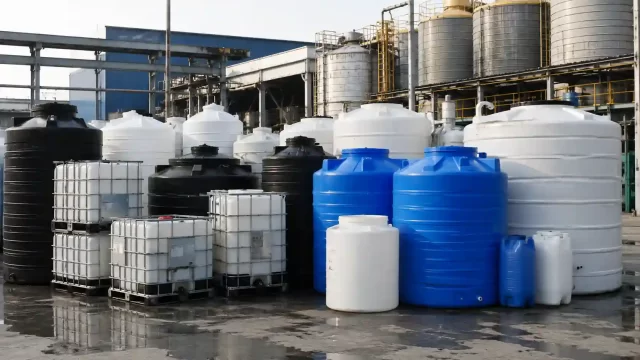
Across India, storage requirements have changed significantly over the last decade. Industries are handling larger production volumes, agricultural operations are expanding, and businesses are seeking more efficient ways to store and transport materials.
Instead of relying on multiple smaller containers, many organizations now prefer larger-capacity storage solutions that simplify handling and reduce operational complexity. Storage buyers are also becoming more focused on product lifespan. Even a small increase in service life can reduce replacement planning and operational disruptions across multiple facilities, influencing how manufacturers approach large-capacity container production.
Demand for larger storage products is being driven by businesses seeking to simplify material handling, optimize storage capacity, and reduce operational complexity. Whether managing process water, industrial liquids, production ingredients, or raw materials, many organizations now prefer fewer large-capacity containers instead of coordinating multiple smaller units across facilities.
As applications grow, the ability of 500 Litre Blow Moulding Machines to produce durable, reliable storage solutions reassures procurement managers of long-term product value and performance.
Technology Upgrades Across Plastic Blow Moulding Machine Manufacturers in India
Industrial buyers have long prioritized durability, lifespan, transportation performance, and maintenance requirements when selecting storage solutions. What has changed is the level of performance expected from these products. Manufacturers are now expected to deliver larger-capacity storage solutions that offer greater reliability, longer service life, and consistent performance across increasingly demanding applications.
As a result, leading plastic blow moulding machine manufacturers in India have invested heavily in technologies that improve product consistency and structural strength.
Modern machine designs now incorporate advanced extrusion systems, improved wall-thickness programming, and automated process controls that help manufacturers maintain greater consistency throughout production. Improved cooling technologies reduce distortion risks, while energy-efficient systems support lower operating costs. Together, these advancements allow manufacturers to achieve tighter production tolerances, directly improving the durability and reliability of large-capacity plastic storage products.
Why Large Containers Fail in Real Conditions
One common misconception is that larger containers require more material. In reality, scaling up introduces engineering challenges like uneven material distribution and structural stress, which manufacturers must address to ensure durability during storage and transportation.
Consider a 500-litre industrial container filled with liquid. The weight generated at the base can create significant stress during storage and transportation. If material distribution is uneven, certain sections may deform or crack over time. Containers may pass inspection but develop problems months later after repeated filling cycles, stacking, transportation, or continuous loading. Small manufacturing inconsistencies can gradually become structural weaknesses in real operating environments.
Manufacturers commonly encounter challenges such as:
- Base deformation under heavy loads.
- Weak corners during stacking.
- Stress cracking near outlets and fittings.
- Uneven wall thickness.
- Distortion caused by improper cooling.
Another overlooked challenge occurs before a container reaches the customer. Outlet connections, bottom corners, and lifting areas are often exposed to concentrated stress during handling. As a result, manufacturers increasingly focus on strengthening these localized zones rather than simply increasing overall wall thickness. These handling stages can place significant stress on corners, base sections, and outlet areas, making manufacturing precision essential from the start.
This is where 500 litre blow moulding machines offer a key advantage. Their advanced control systems ensure precise material distribution, strengthening critical areas and reducing the risk of early product failure, both of which are vital for long-term durability.
The Durability Advantage of 500 Litre Blow Moulding Machines
Durability begins long before a storage tank reaches a customer. It starts during the manufacturing process itself.
Modern blow moulding machines allow manufacturers to control several critical factors that influence long-term product performance. These factors directly affect how well a storage product performs under real-world loading, handling, and environmental conditions.
|
Production Factor |
Impact on Storage Durability |
|
Controlled parison formation |
More uniform material distribution |
| Precise wall-thickness programming |
Stronger stress-bearing areas |
|
Stable cooling cycles |
Reduced warping and distortion |
| Accurate mold replication |
Consistent product dimensions |
| Automated process control |
Lower defect rates |
Depending on the intended application, manufacturers may also need to ensure that finished storage products comply with relevant quality and performance requirements established by the Bureau of Indian Standards (BIS). These requirements further highlight the importance of manufacturing precision and process consistency.
Durability is not simply achieved by making containers thicker. While adding more material may increase strength, it also raises production costs and product weight. Modern manufacturers focus on strategically distributing material to reinforce high-stress areas without unnecessarily increasing resin consumption.
Together, these capabilities help manufacturers produce storage products that can withstand demanding operating conditions while maintaining structural integrity for years.
Where Durability Matters Most
Large-capacity plastic storage solutions are no longer limited to a single sector. Their versatility has created opportunities across a wide range of industries.
In agricultural operations, storage tanks may remain outdoors year-round, exposed to intense sunlight, fluctuating temperatures, and extended periods of continuous use. Maintaining structural stability under these conditions requires consistent wall thickness and balanced material distribution.
In industrial facilities, storage containers are frequently moved between production areas, warehouses, and vehicles. Repeated handling can place stress on lifting points, corners, and outlet sections, making durability a critical requirement.
Food processing and construction sectors also depend on reliable large-capacity storage solutions that support hygiene, mobility, and long-term performance.
Although these industries use storage products in different ways, they share a common requirement: long-term durability under demanding operating conditions. The ability of 500 Litre Blow Moulding Machines to deliver consistent quality makes them valuable across all these sectors.
Continuous innovation from extrusion blow moulding machine manufacturers is also helping processors improve production efficiency while maintaining product quality across larger container formats.
When Manufacturers Move Beyond Smaller Machines
Many plastic processors begin with smaller production capacities before expanding into larger markets. As customer requirements evolve, production strategies often change as well.
Both 100 litre blow moulding machines and 200 litre blow moulding machines remain important for many applications. However, growing demand for larger storage solutions frequently creates new opportunities for manufacturers.
The transition often occurs when businesses seek:
- Higher-value product categories.
- Greater production efficiency.
- Expanded industrial customer bases.
- Larger storage and transportation solutions.
- Reduced production complexity for bulk applications.
Moving into larger-capacity manufacturing allows companies to serve sectors where product durability and volume requirements are becoming increasingly important.
Production Economics of Large Storage Manufacturing
While durability is important, manufacturers also evaluate production economics before investing in new equipment. Production costs extend beyond machine operation. Product failures, replacements, warranty claims, and customer dissatisfaction can significantly affect profitability. Improving consistency at the production stage helps minimize these hidden costs.
Larger-capacity machines can improve operational efficiency by reducing the number of production cycles needed to achieve the desired storage volume.
For example, producing larger storage containers may offer benefits such as:
- Lower labor requirements per litre of storage capacity.
- Fewer handling operations.
- Reduced packaging requirements.
- Simplified inventory management.
- Higher-value product opportunities.
These advantages make 500 litre blow moulding machines attractive for businesses looking to expand into industrial and infrastructure-focused markets. Many businesses also work closely with an experienced HDPE blow moulding machine manufacturer when expanding into large-capacity storage applications that require consistent material processing and long-term product durability. For many processors, selecting the best blow moulding machine in India involves balancing production efficiency, product quality, operating costs, and future expansion potential.
Trends Reshaping the Blow Moulding Machine in India Market
The future of the blow moulding machine in India market is increasingly connected to automation, sustainability, and smart manufacturing. Manufacturers are seeking equipment capable of reducing material waste while improving production visibility and process control.
Another emerging focus is process consistency. Modern control systems help maintain uniform wall thickness, dimensional accuracy, and structural performance across long production runs. These developments are helping shape the future of Blow Moulding India, where manufacturers are increasingly investing in automation, sustainability, and smarter production technologies. Manufacturers are also adopting real-time production monitoring, automated quality-control systems, and digital production management tools to improve operational visibility. At the same time, energy-efficient machine designs and material optimization technologies are helping processors reduce waste while supporting more sustainable production practices.
As industrial storage requirements continue to expand, machine manufacturers will play a critical role in helping processors deliver stronger and more sustainable products.
Conclusion
The demand for durable plastic storage solutions continues to grow across agriculture, construction, chemicals, food processing, and industrial manufacturing. Meeting these expectations requires more than simply increasing container size. It requires advanced production technology capable of delivering consistent quality, optimized material distribution, and long-term product durability. 500 litre blow moulding machines provide the precision and manufacturing control needed to produce storage solutions that perform reliably in real-world conditions.
If you are looking to expand your manufacturing capabilities with advanced blow moulding technology, contact IFC Blow Moulding to explore innovative machine solutions designed for efficiency, durability, and long-term production success.
Frequently Asked Questions
- What industries commonly use products manufactured by 500 litre blow moulding machines?
Products made using 500 litre blow moulding machines are widely used in agriculture, chemical processing, food manufacturing, construction, logistics, and industrial storage applications where large-capacity and durable plastic containers are required.
- Why are wall-thickness variations a concern in large plastic storage products?
Uneven wall thickness can create weak areas that are more likely to crack, deform, or fail under load. Proper material distribution helps maintain structural integrity and improves the overall lifespan of storage containers.
- How do 500 litre blow moulding machines support product consistency?
These machines use advanced control systems to regulate material flow, cooling, and molding conditions. This helps manufacturers achieve consistent dimensions, improved durability, and reduced defect rates throughout production runs.
- What advantages does HDPE offer for storage container manufacturing?
HDPE provides excellent impact resistance, chemical resistance, durability, and lightweight performance. These characteristics make it a preferred material for manufacturing storage tanks, industrial containers, and bulk handling products.
- When should manufacturers consider upgrading from 200 litre blow moulding machines?
Manufacturers often upgrade when customer demand shifts toward larger storage products, industrial applications, or higher-volume markets. Larger-capacity machines can improve efficiency while supporting broader product offerings.
- What should businesses look for when selecting a blow moulding machine supplier?
Businesses should evaluate machine quality, technical support, energy efficiency, automation features, production flexibility, and long-term reliability. These factors influence both operational performance and return on investment.
